Zellige
Zellige workshop in Fes: patterns, materials, and hands-on learning
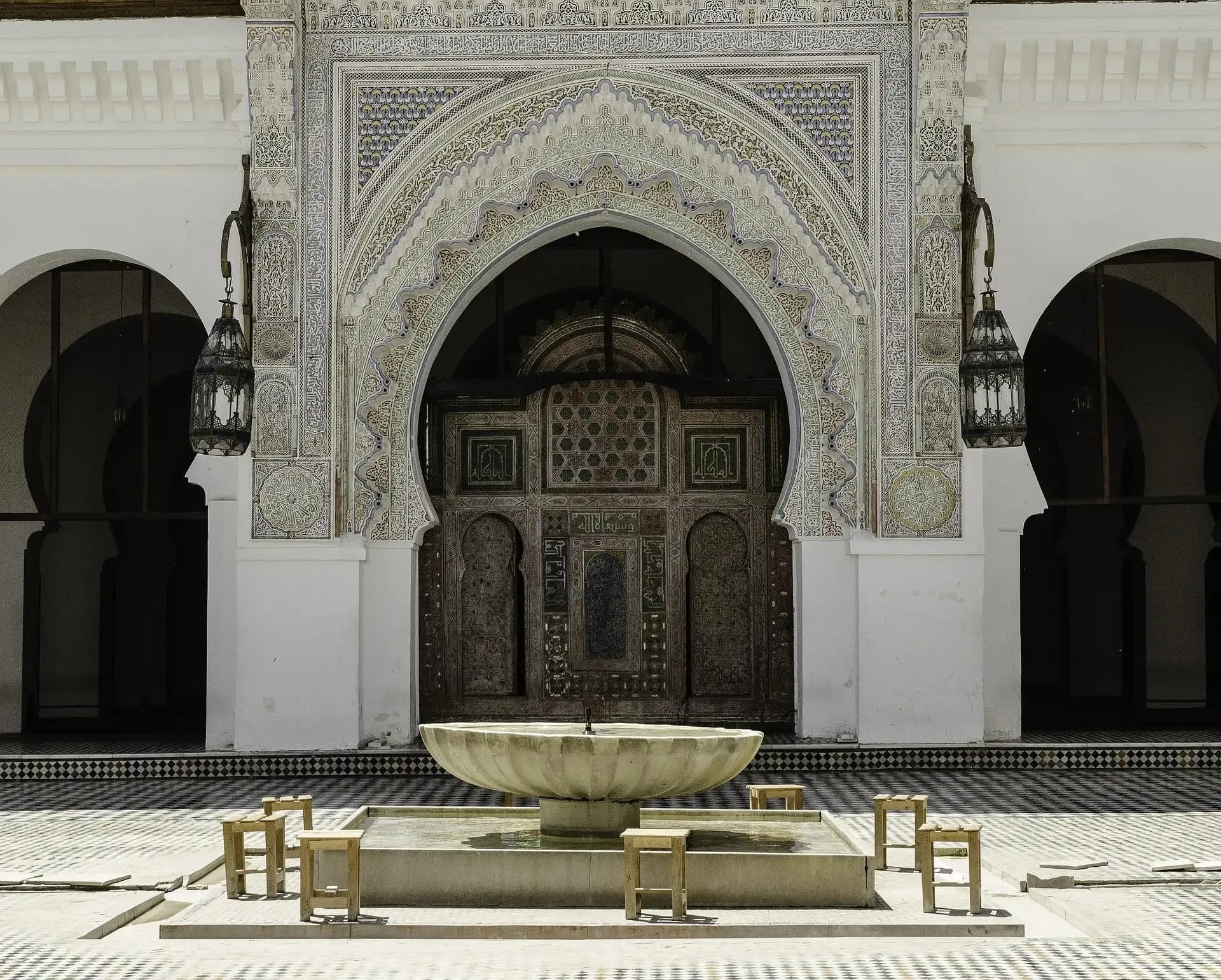
Zellige—Morocco’s celebrated glazed-tile mosaic—turns geometry into surface. In Fes, travelers often admire courtyards and fountains covered in interlocking shapes. A workshop lets you sample the patience and precision behind that beauty, even if your first panel is small and imperfect.
10 min read
What zellige is (and is not)
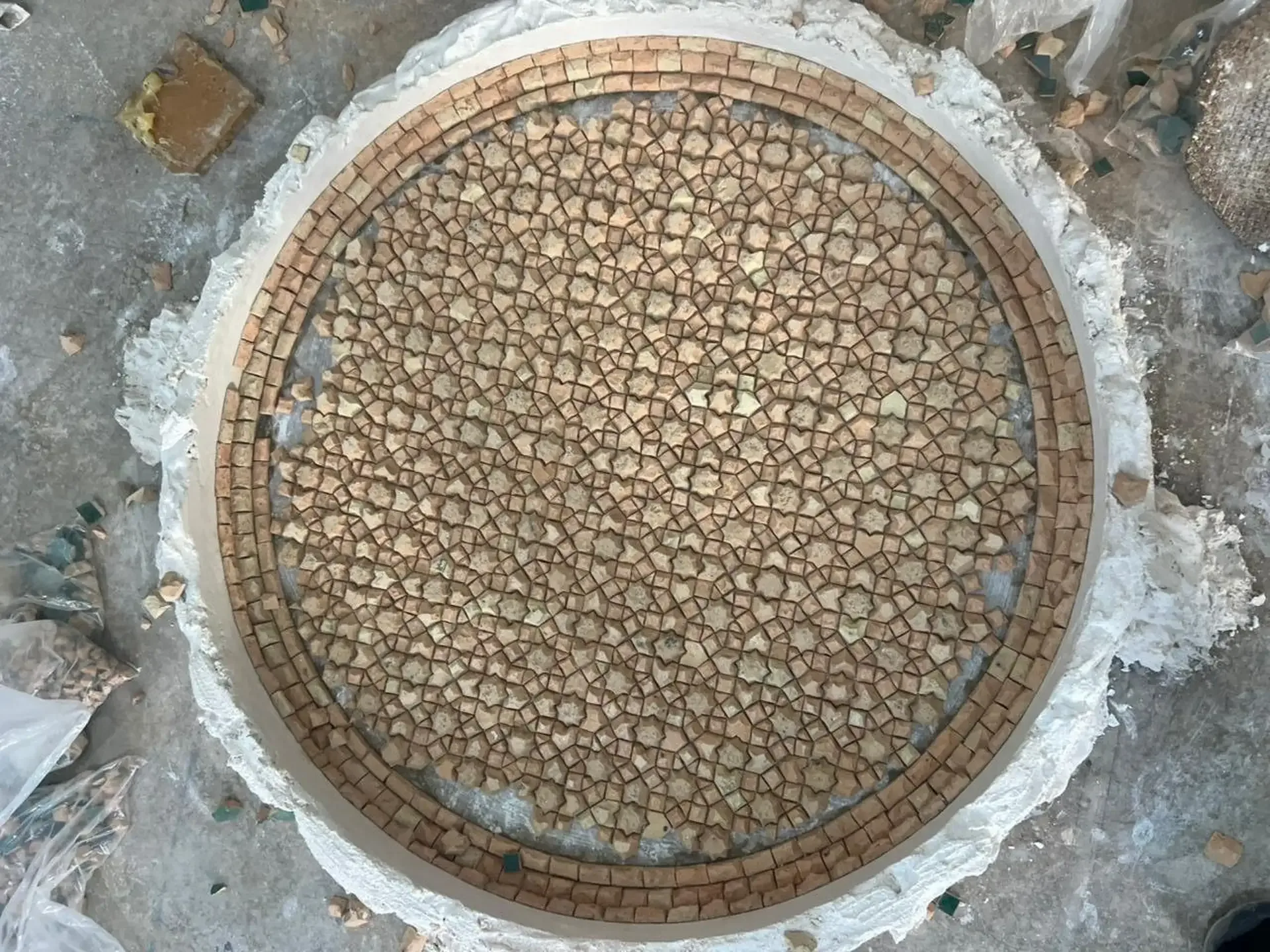
Zellige generally refers to small glazed tiles cut into geometric pieces and assembled into repeating patterns. It is related to broader Islamic geometric design traditions, yet it has a distinctly Moroccan craft identity in how tiles are prepared, cut, and set.
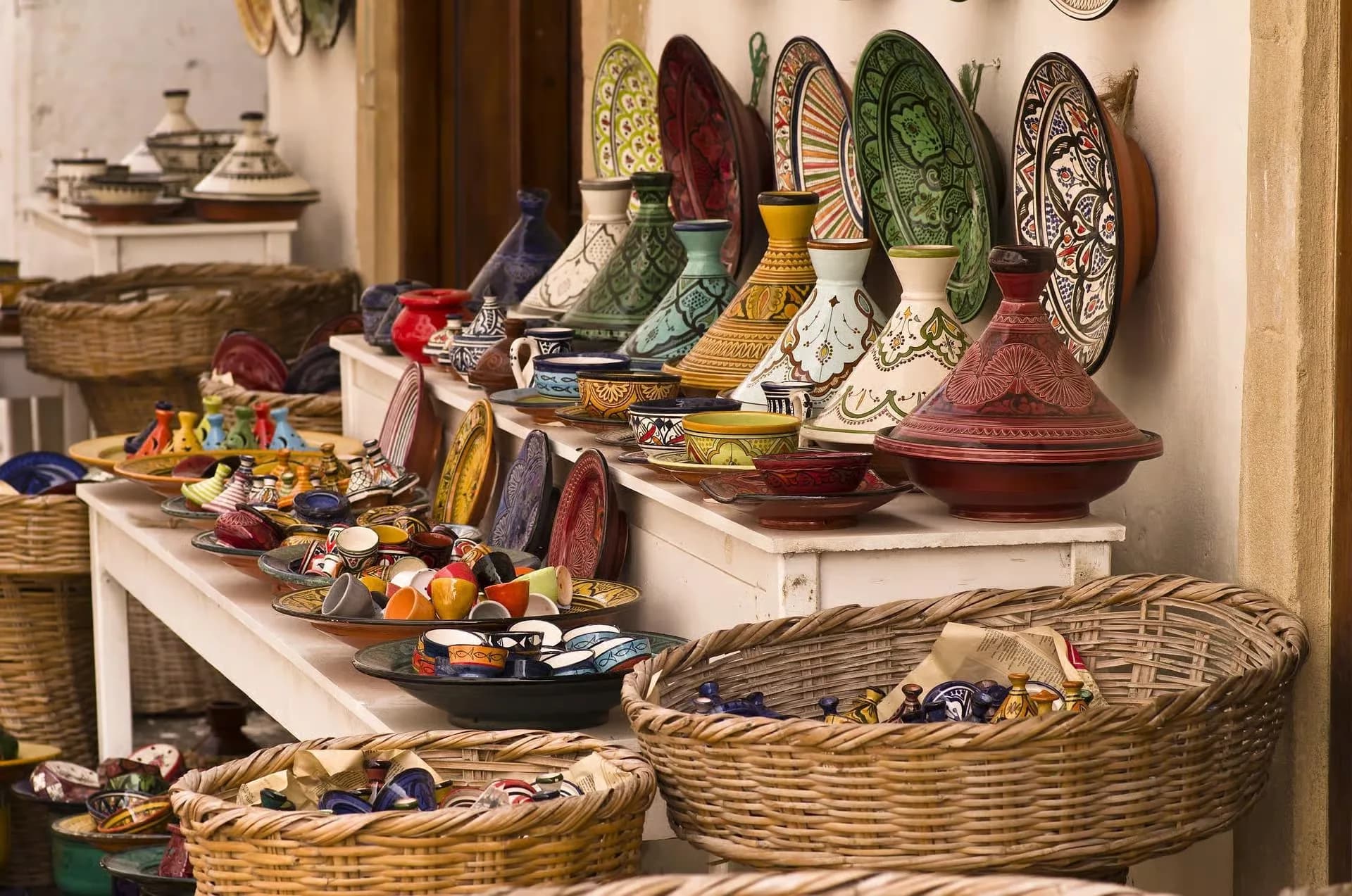
It is not the same as painting freehand motifs on a plate, nor identical to shaping a clay vessel on the wheel. If you love pattern, measurement, and puzzle-like assembly, zellige often fits better than soft clay work.
Geometry, rhythm, and the pleasure of repetition
Many classic compositions rely on stars, polygons, and interlacing lines that create a sense of endless continuation. Artisans traditionally work from known pattern families; beginners usually start with a simplified module rather than a full architectural panel.
The visual calm of a finished wall comes from thousands of careful decisions. In a short session you experience a scaled-down version of that rhythm: choose, cut or place, check alignment, adjust, repeat.
Materials and tools you may encounter
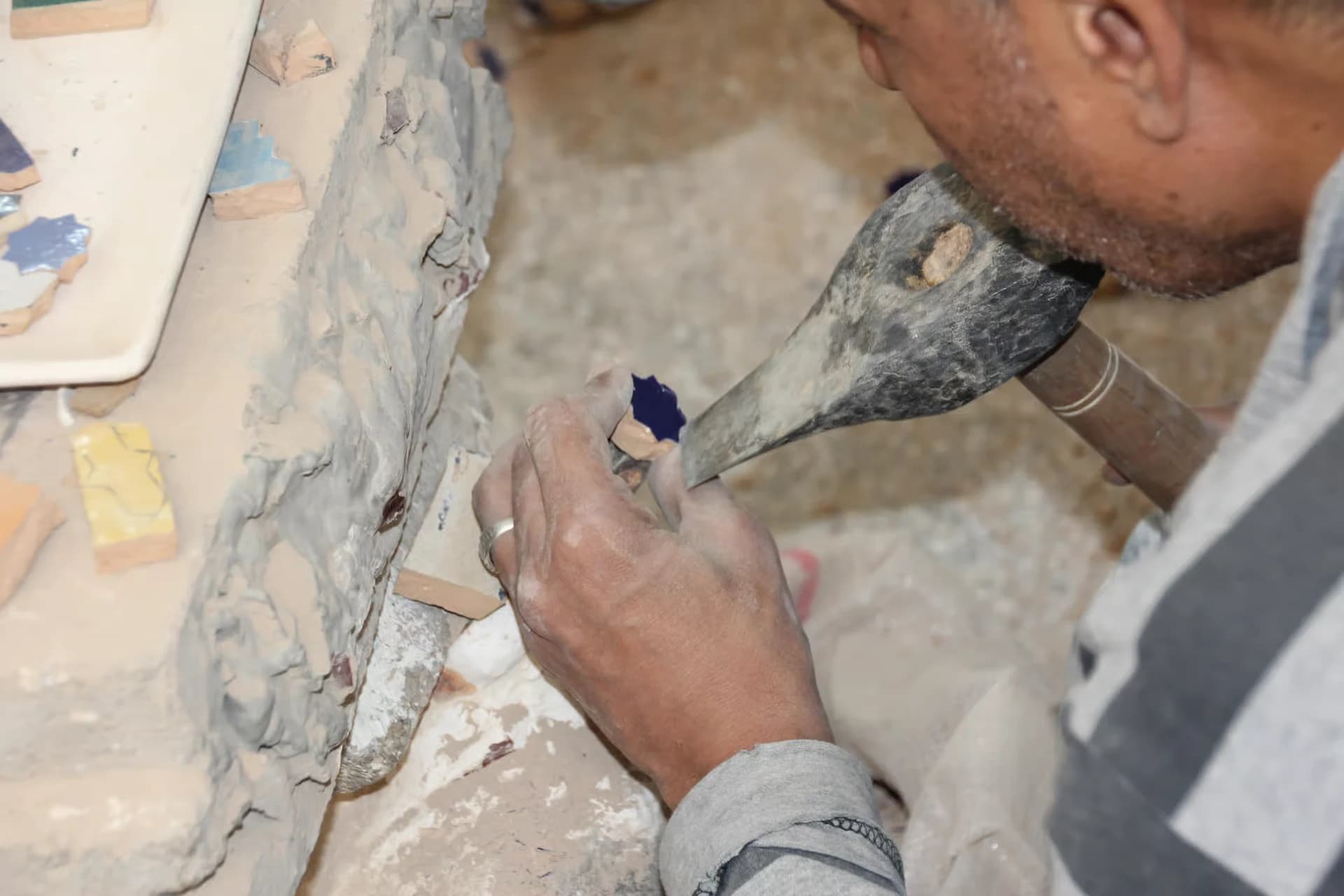
Workshops commonly use glazed ceramic pieces, cutting tools suited to tile, and a surface or frame for assembling a motif. Exact tools and clay bodies depend on the host’s practice—ask what you will handle and whether protective measures (gloves, eye protection) are provided when cutting is involved.
Glaze colors in Moroccan mosaic often include greens, blues, whites, and earth tones, though palettes vary. Treat color names you hear as local workshop vocabulary rather than a fixed national catalogue.
A typical hands-on process outline
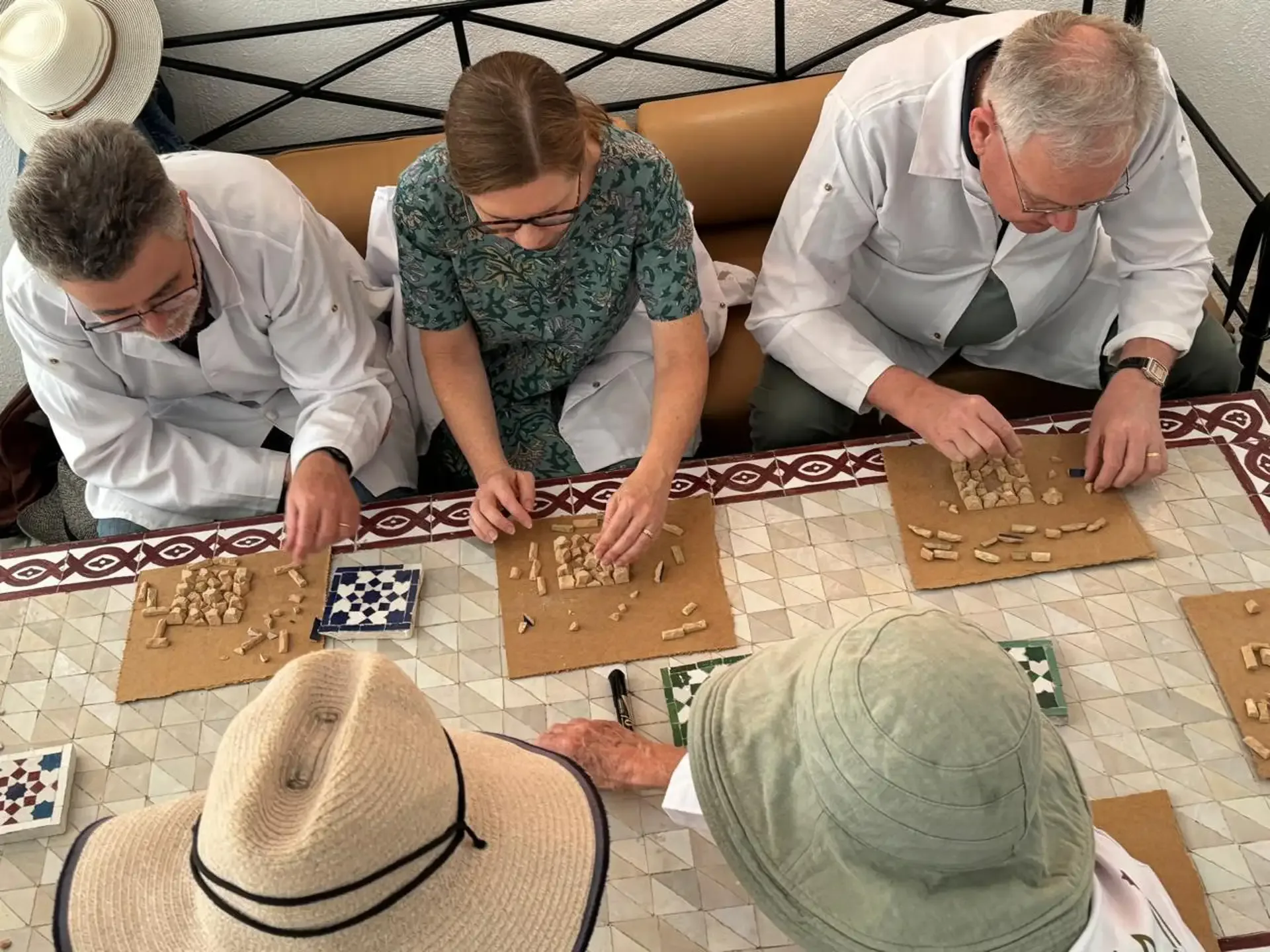
A beginner session may include an introduction to a pattern, practice cutting or fitting pieces, and assembling a small composition. Some formats emphasize placement of pre-cut shapes; others introduce controlled cutting under supervision.
Because architectural zellige is a long craft path, visitor workshops focus on understanding the logic of the pattern and the feel of the material—not on mastering a lifelong trade in one afternoon.
Learning zellige in a workshop setting
Instruction matters: good guidance explains why a line must stay straight, how to read a motif, and when to stop forcing a piece that does not fit. Expect to slow down. Rushing is the quickest way to chip edges or lose the pattern’s balance.
At Workshop Fès Pottery in Hay Lalla Yacoute, Ain Nokbi, visitors can book a zellige mosaic workshop. Confirm language, group size, and what you take home when you enquire—pricing is on request.
Who tends to enjoy zellige most
Travelers who like puzzles, design, photography of detail, or quiet concentration often thrive. Children or mixed-age groups may enjoy it too when the format is adapted—ask what ages the session suits.
If you prefer soft, tactile clay sculpting instead, consider pottery or pottery painting and compare formats before booking.
How to prepare for your session
Wear closed shoes and clothes that can handle dust. Bring patience and a willingness to remake a section if the geometry drifts. Ask in advance about accessibility needs so the organizer can advise honestly.
Afterward, look at city walls and courtyards with new eyes: you will notice seams, color shifts, and repairs that were invisible the day before.